


For Operations-Heavy Organizations
Automate the manual work — without giving up control of it.
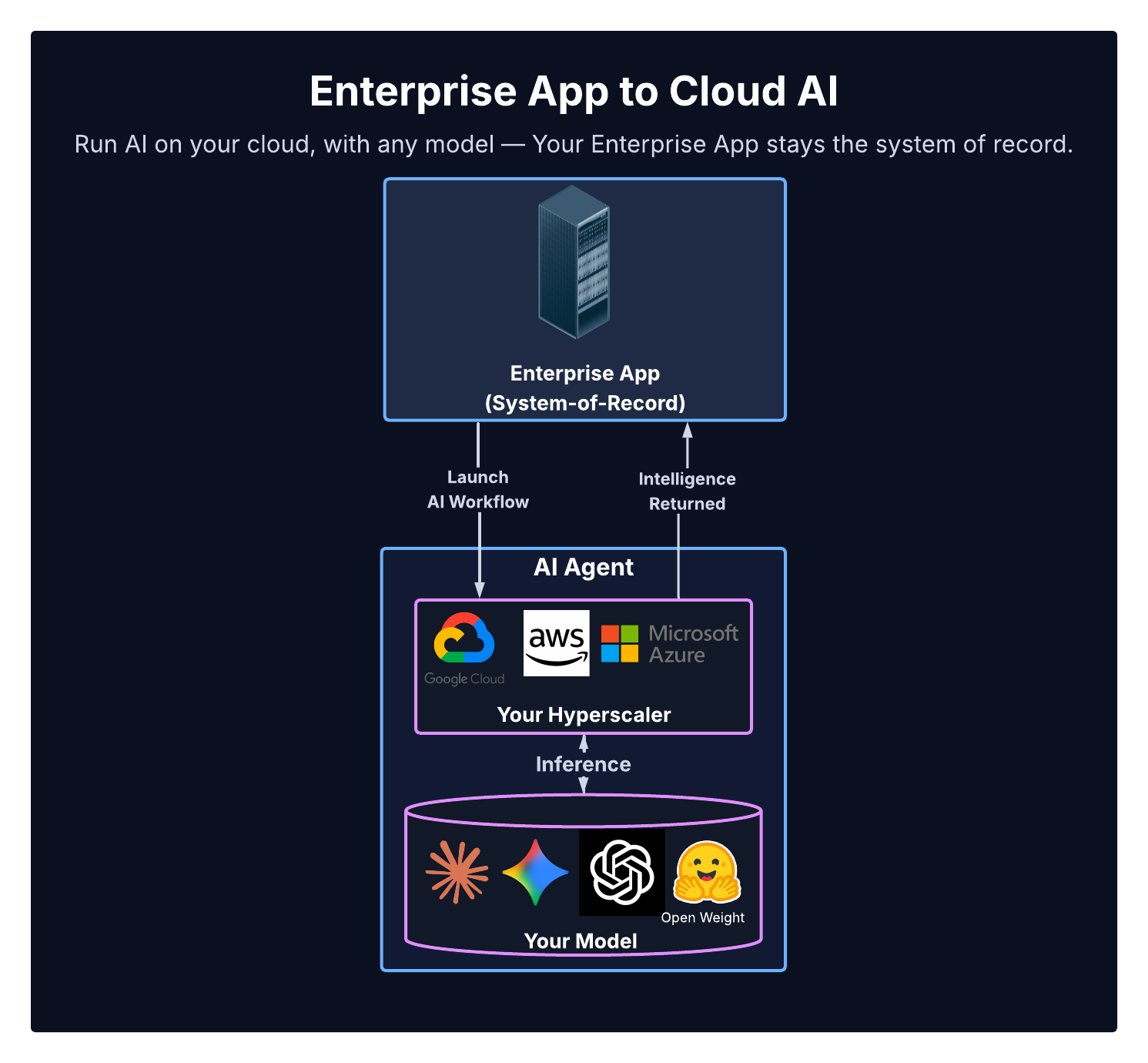
AI agents can take real action across your systems, not just answer questions. The question isn't whether they're capable enough. It's whether you can put one into a business process and still know what happened, why, and who's accountable. We build agents designed for that answer from the start.
Contact UsThe Concern We Hear Most
"What happens when it gets one wrong?"
Most organizations can identify the processes worth automating within a few minutes. What stalls the project is the next question. An agent that can act on your systems can also act incorrectly on your systems, and in a regulated or high-stakes environment, "the model decided" is not an answer anyone can give a board, an auditor, or a client. The instinct is to keep the agent advisory — but an agent that only makes suggestions leaves most of the manual work exactly where it was.
How It Works
Agents that act, under conditions you set.
Map the process and its decision points
Before any agent is built, we work through the process as it runs today: the steps, the exceptions, and specifically which decisions carry consequence. That map determines where automation is safe and where a human stays in the loop.
Build the agent around your operating rules
Your escalation thresholds, approval requirements, and standards for a correct outcome become explicit constraints in the system — not conventions the model is expected to infer.
Instrument every decision
Each action the agent takes is logged with its inputs, reasoning, and outcome. Auditability is designed in at the start; it can't be added convincingly afterward.
Deploy in stages, with a human on the critical path
Start with the agent proposing and a person approving. Expand its autonomy where the record justifies it. Consequential decisions keep a human approval step by design, not as a temporary phase.
Why This Approach
Speed on repetitive work
Processes that ran at the pace of available staff time run continuously, with consistency that doesn't vary by workload or day of the week.
Your people on higher-value work
Automation earns its return when skilled staff stop doing routine processing and start doing the work you actually hired them for.
Control where it counts
Human approval on consequential decisions, with escalation rules you define. The agent handles volume; your team keeps judgment.
A defensible record
Every action logged with its inputs and rationale — so you can answer what happened and why, whether the question comes from a client, an auditor, or your own team.
Where this fits
- Automate high-volume, rules-heavy processes currently limited by staff capacity
- Free skilled staff from routine processing without losing oversight of it
- Deploy automation into regulated or client-sensitive workflows that require an audit trail
- Take action across multiple systems where the coordination itself is the manual burden
Where agents don't belong.
Not every manual process should be automated. Some are manual because the judgment involved is genuinely hard to specify; automating those produces confident errors at scale rather than efficiency. Others run at a volume that doesn’t justify the build. We’d rather identify those in discovery than deliver an agent that quietly makes worse decisions faster.