

For Data-Sensitive Organizations
Deploy capable AI without your data ever leaving your control.
Open-weight models have closed most of the capability gap with frontier systems. That changes the calculus for any organization holding data it can't send to a third party. We train and deploy open-weight models on your infrastructure — so your proprietary data stays in your custody, your costs stay predictable, and the model works the way your business does.
Contact UsThe Concern We Hear Most
"We can't send that data to an API."
Most organizations discover their highest-value AI use cases sit on top of their most sensitive data — contracts, financials, member records, case files, proprietary research. The moment a use case touches that data, the frontier API route runs into legal, regulatory, or contractual walls. So the project stalls, or it gets scoped down to something safe and low-value. The assumption underneath is that keeping data in-house means settling for a weaker model. That assumption is now out of date.
How It Works
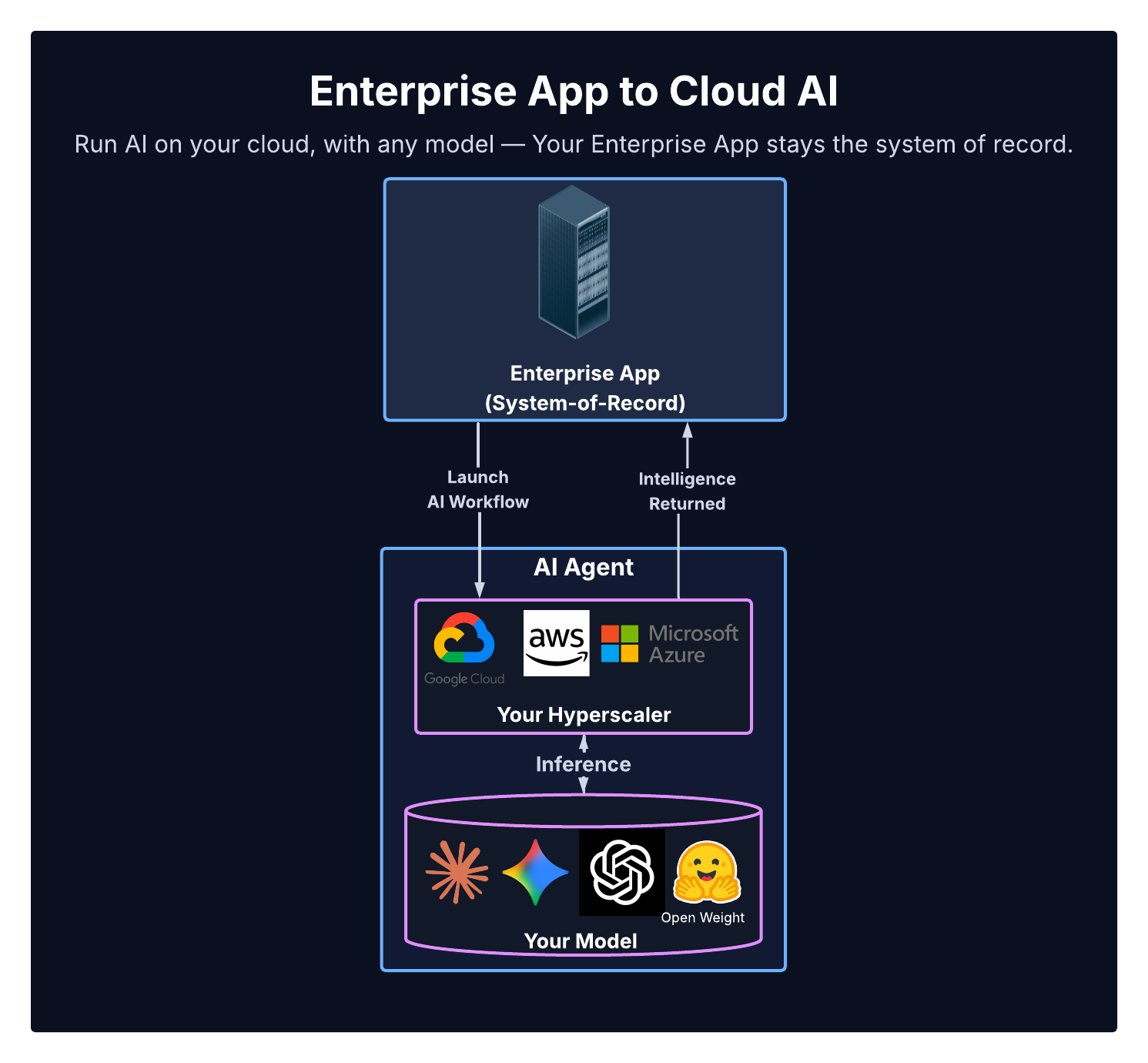
Your data. Your infrastructure. Your model.
Select the right open-weight model
Model choice is a workload decision, not a brand decision. We evaluate current open-weight models against your actual tasks, latency requirements, and hardware — and we're candid when a frontier API is the better answer.
Adapt it to your domain
Fine-tuning on your proprietary data teaches the model your terminology, your document structures, and your standards of a good answer. This is the step closed frontier models don't offer.
Deploy on infrastructure you control
Your own data center, your private cloud, or your VPC. The model runs on standard open-source inference tooling — you're not running any model vendor's software, and your data never crosses your boundary.
Operate it like production software
Versioning, evaluation, monitoring, and a path to retrain as your data and requirements change. A model in production is a system, not a deliverable.
Why This Approach
Full data custody
Sensitive data never leaves infrastructure you control. No third-party processing, no ambiguity about where your data went or what it trained.
Predictable economics
Self-hosted inference replaces per-token pricing with capacity you own. For sustained, high-volume workloads, the cost curve bends in your favor.
A model that knows your domain
Fine-tuning on your data produces a model tuned to your vocabulary and your definition of a correct answer — not a general-purpose assistant approximating it.
Where this fits
- Analyze confidential contracts, financials, or member data without third-party processing
- Meet data-residency, regulatory, or client contractual requirements that rule out external APIs
- Reduce recurring AI spend on high-volume workloads by running inference on your own compute
- Build domain-specific capability where a general-purpose model consistently falls short
When this isn't the right answer.
Self-hosting means owning GPU infrastructure and the operational burden that comes with it. For low-volume, non-sensitive workloads, a frontier API is usually faster and cheaper. We’ll tell you when that’s the case. This approach earns its keep when data custody is non-negotiable, volume is sustained, or domain specificity matters — and we’d rather establish that in discovery than three months into a build.
The Research Behind This
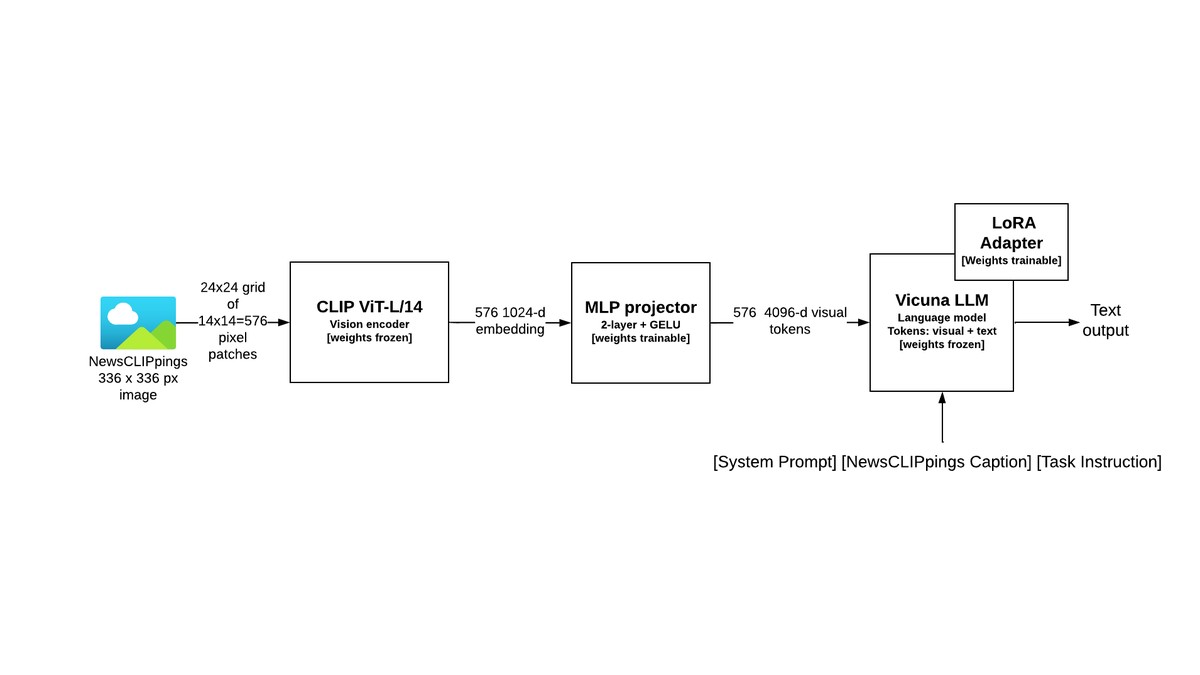
A Fine-Tuned 7B Open-Weight Model Outperformed a Frontier Model on Misinformation Detection
Training 0.71% of a 7B model's parameters beat Gemini 3.1 Pro zero-shot on the same benchmark — at a fraction of the inference cost.