

For Knowledge-Intensive Organizations
Make AI answer from your knowledge, with the receipts.
Retrieval-Augmented Generation grounds every answer in your own documents, policies, and data — and shows which source it came from. That turns a general-purpose model that sounds confident into a system your team can actually rely on, and check.
Contact UsThe Concern We Hear Most
"It's convincing. That's the problem."
A general-purpose model will answer questions about your business with complete fluency and no access to your business. It doesn't know your policies, your product specifics, or last quarter's decisions — but nothing in its tone signals the gap. For a team fielding real questions from staff or customers, a plausible wrong answer is worse than no answer, because it costs nothing to accept and everything to discover later.
How It Works
Ground the answer. Show the source.
Connect and prepare your knowledge
Documentation, policies, contracts, past decisions, ticket history — wherever your institutional knowledge lives. Preparation matters more than most teams expect: how content is structured and chunked largely determines retrieval quality.
Retrieve what's actually relevant
For each question, the system finds the passages that bear on it. This step, not the model, is where most RAG implementations succeed or fail — so it's where the engineering effort concentrates.
Generate an answer anchored to the source
The model answers from the retrieved material rather than from general training. Answers stay within what your knowledge base actually supports.
Cite, so the answer can be checked
Every response points back to the documents it drew on. Users verify in seconds instead of trusting blind — and you can see when the knowledge base itself is the thing that needs fixing.
Why This Approach
Knowledge that's finally usable
Institutional knowledge sitting in documents nobody reads becomes answerable in seconds — including the material that was effectively lost to volume.
Substantially fewer hallucinations
Grounding answers in retrieved source material removes the conditions that cause confident invention on questions about your business.
Answers you can verify
Citations mean any answer can be checked against its source. Trust comes from being able to confirm, not from being asked to assume.
Where this fits
- Give staff instant, sourced answers from internal documentation, policies, and procedures
- Surface institutional knowledge that’s technically available but practically unreachable
- Support customer-facing teams with answers grounded in your actual product and service detail
- Reduce the load on subject-matter experts who currently field the same questions repeatedly
RAG isn't a fix for bad source material.
Retrieval quality is capped by knowledge quality. If your documentation is contradictory, outdated, or scattered across systems nobody maintains, RAG will retrieve that faithfully and answer from it. The useful outcome is that it makes those gaps visible fast — but the content work is real, and we’d rather scope it honestly up front than let it surface mid-project.
Case Study
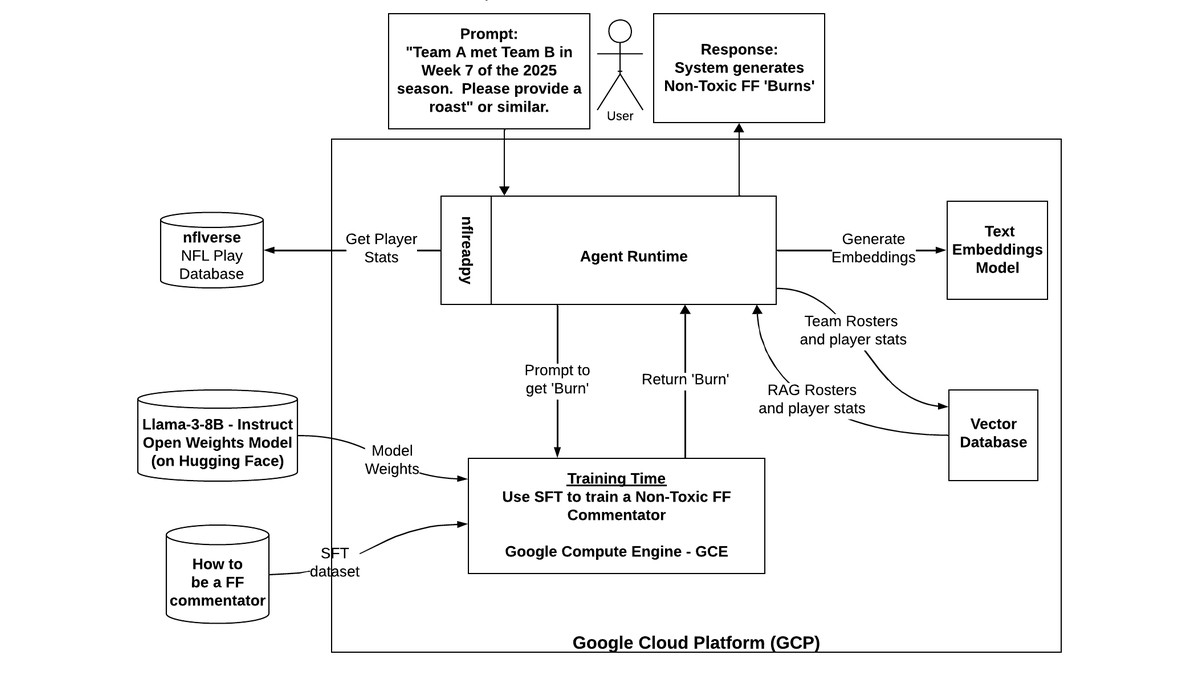
Retrieval Lifted Factual Accuracy from 3% to 72%
The same model, on the same task, was almost entirely unreliable without retrieval and largely accurate with it.