08/28/2026
The AI workflow for the new aptaria.com
Last week we launched our new website. It reflects where the work has moved: Artificial Intelligence solutions for the enterprise.



August 13, 2026 |
Last week we launched the new aptaria.com. It’s built around enterprise AI, which is where the bulk of our work now sits — but that’s not the interesting part.
The interesting part is how we built it. We used AI to strategize, design, and develop the site. Not as a novelty, and not as a marketing stunt. As the actual working method. Here’s what that looked like, including the parts that still required a human.
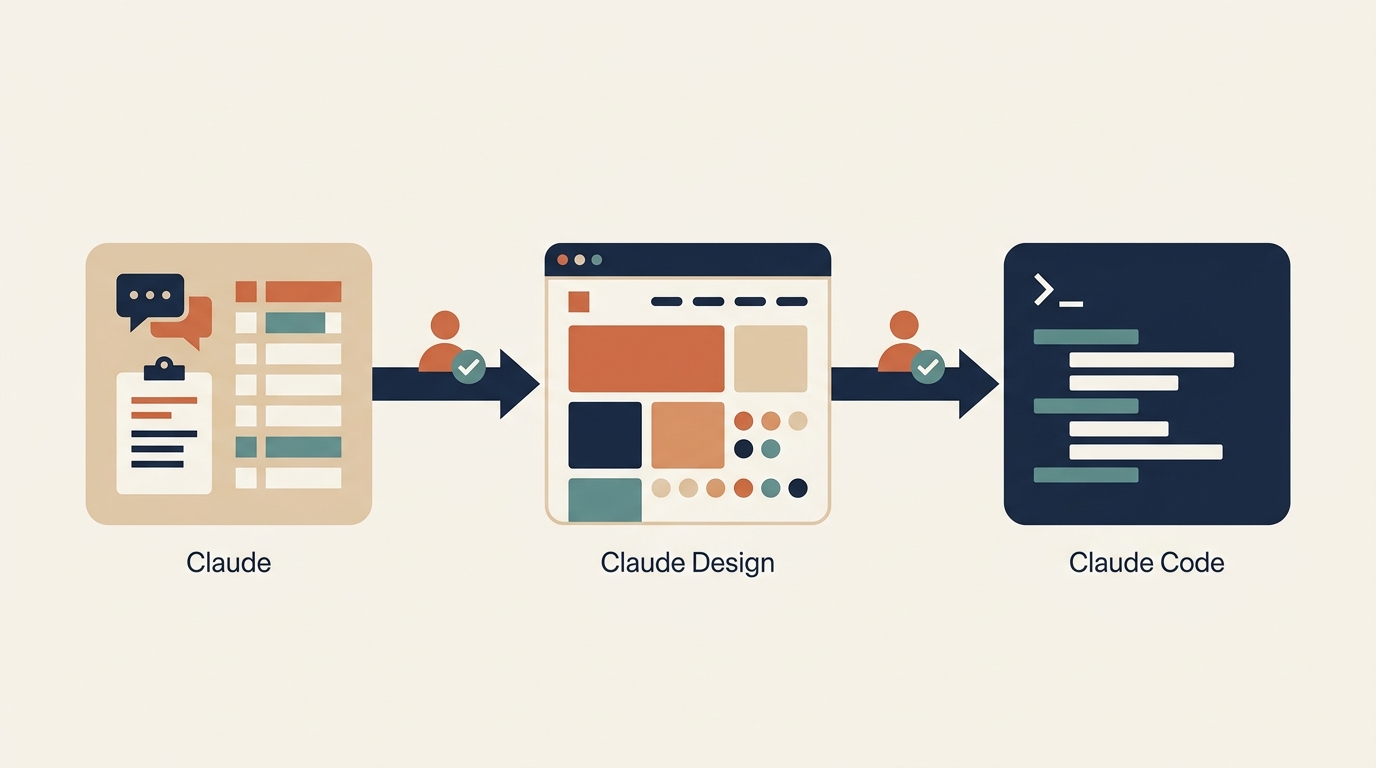
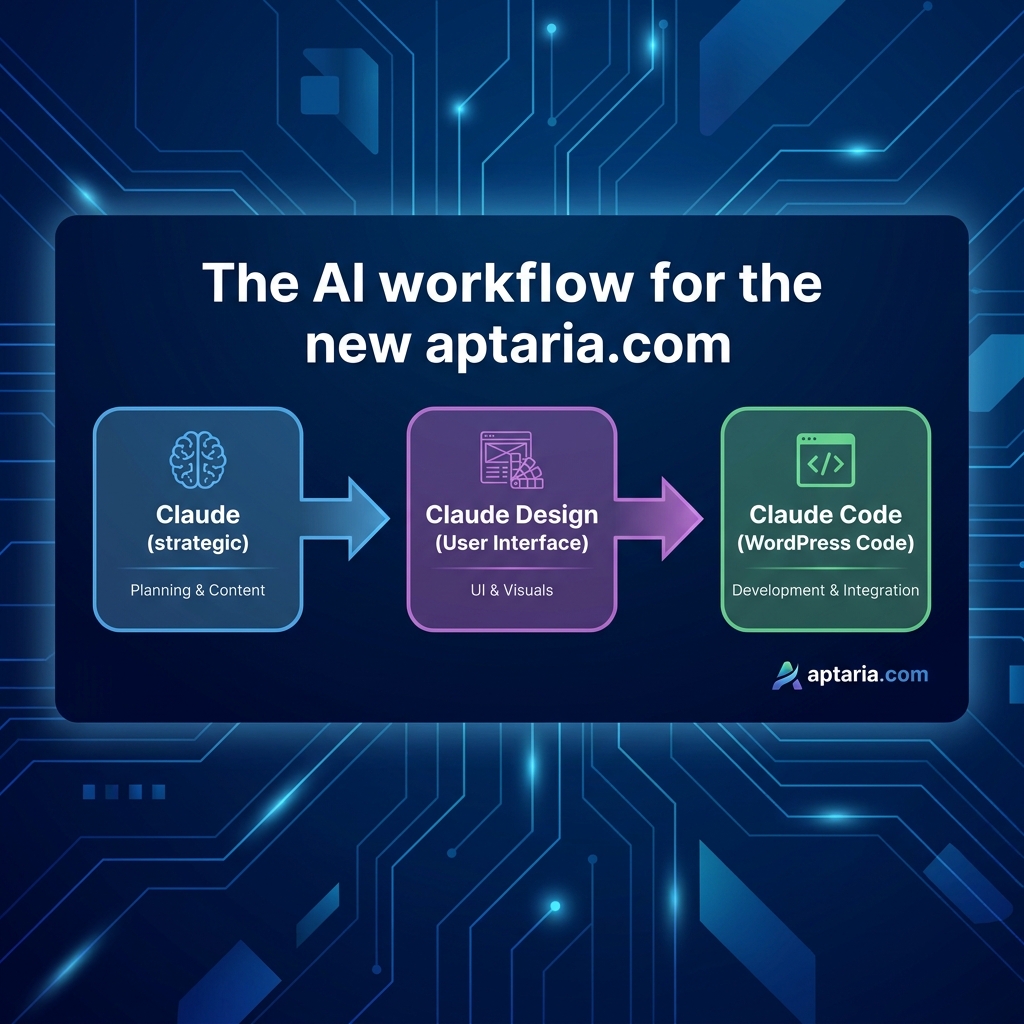
Claude worked as a marketing consultant on go-to-market strategy. Claude Design acted as our web design specialist. Claude Code served as the WordPress developer. Three distinct functions that would normally mean three vendors, three scoping conversations, and three sets of calendars to reconcile.
What made it work was that a human stayed in the loop at every handoff. Not reviewing output at the end — deciding at each step whether the direction was right before letting the next stage build on it. Remove that and you don’t get speed. You get a fast pile of confidently wrong decisions.
Before any design work, we spent real time with Claude codifying our approach — formalizing the AI solutions we’re bringing to market. Some we’ve been delivering to clients for two years. Others are new, built for demand we expect rather than demand we’ve already seen.
This part moved faster than it should have for one reason: Claude had been a strategic partner in the months leading up to this. It already understood the pivot. We weren’t briefing a new consultant on our business. That accumulated context turned out to be the single biggest accelerant in the project.
With strategy in hand, we moved to Claude Design. The goal wasn’t a blank-page redesign — we launched a design language a couple of years ago that still works, and throwing it out would have been vanity, not strategy. We wanted it updated for the new offerings.
We iterated through several UI directions quickly and generated marketing copy for each solution alongside them. Copy and design developed together rather than sequentially, which is unusual and better.
Claude Code took the static HTML and CSS and brought it into WordPress. Worth being precise about the setup, because it shapes how you work: Claude and Claude Design run in the browser, Claude Code runs from the command line — though it’s now also available as a VS Code plug-in, similar to Cursor.
In practice this meant two Chrome tabs open side by side and a terminal running underneath. Strategy in one, design in another, implementation in the third. Moving between them took seconds instead of days.
We also picked up aptaria.ai. It won’t do much immediately, but over the coming months we’ll use it for landing pages tied to specific AI services — a place to be more focused than a corporate site allows.
We switched domain registrars and updated DNS entries mid-project. Our WordPress hosting and administration partner made that survivable.
This deserves emphasis because it’s the honest counterweight to everything above. AI collapsed the cost of strategy, design, and implementation. It did not collapse the cost of infrastructure that breaks in ways nobody anticipated. That still required people who knew the environment and could tell the difference between a caching artifact and a real failure.
Our previous refresh cycles ran months. This one took a couple of weeks, from opening the go-to-market conversation to being live.
The productivity difference is hard to overstate, but I want to be careful about what it actually means. The decisions weren’t faster. Deciding to lead with AI, deciding which solutions to formalize, deciding what the design should say — those took the time they took. What collapsed was the distance between deciding and shipping.
When a refresh costs months, you do it every few years and live with the gap in between. When it costs weeks, the calculation changes entirely. We expect to update the site frequently now — new content, new solutions, adjustments as the AI market moves, which it does constantly.
That’s the real shift. Not that we built a site faster. That continuous iteration became realistic instead of aspirational.
Go take a look at aptaria.com and tell me what you think — particularly if something doesn’t land. I’d rather hear it from you than work it out slowly.