08/28/2026
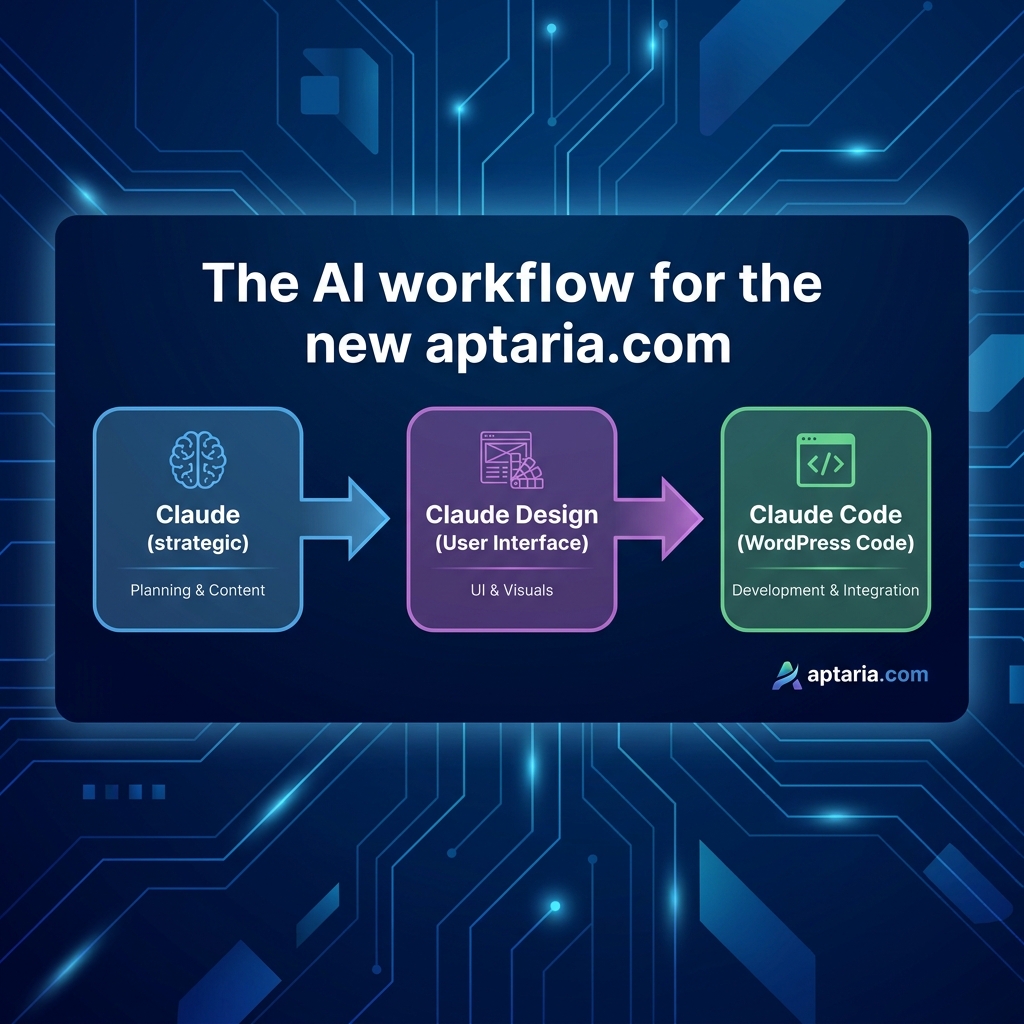
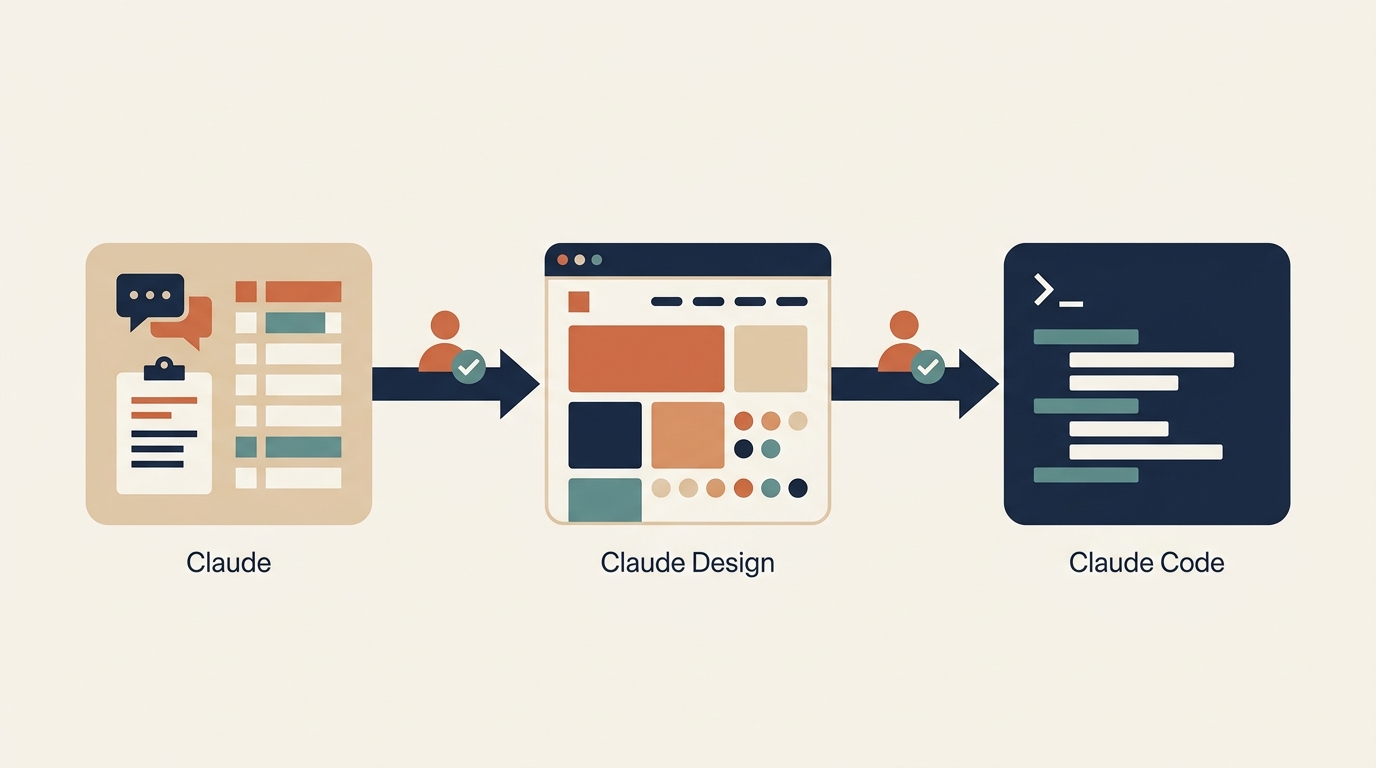
The AI workflow for the new aptaria.com
Last week we launched our new website. It reflects where the work has moved: Artificial Intelligence solutions for the enterprise.



August 17, 2026 |
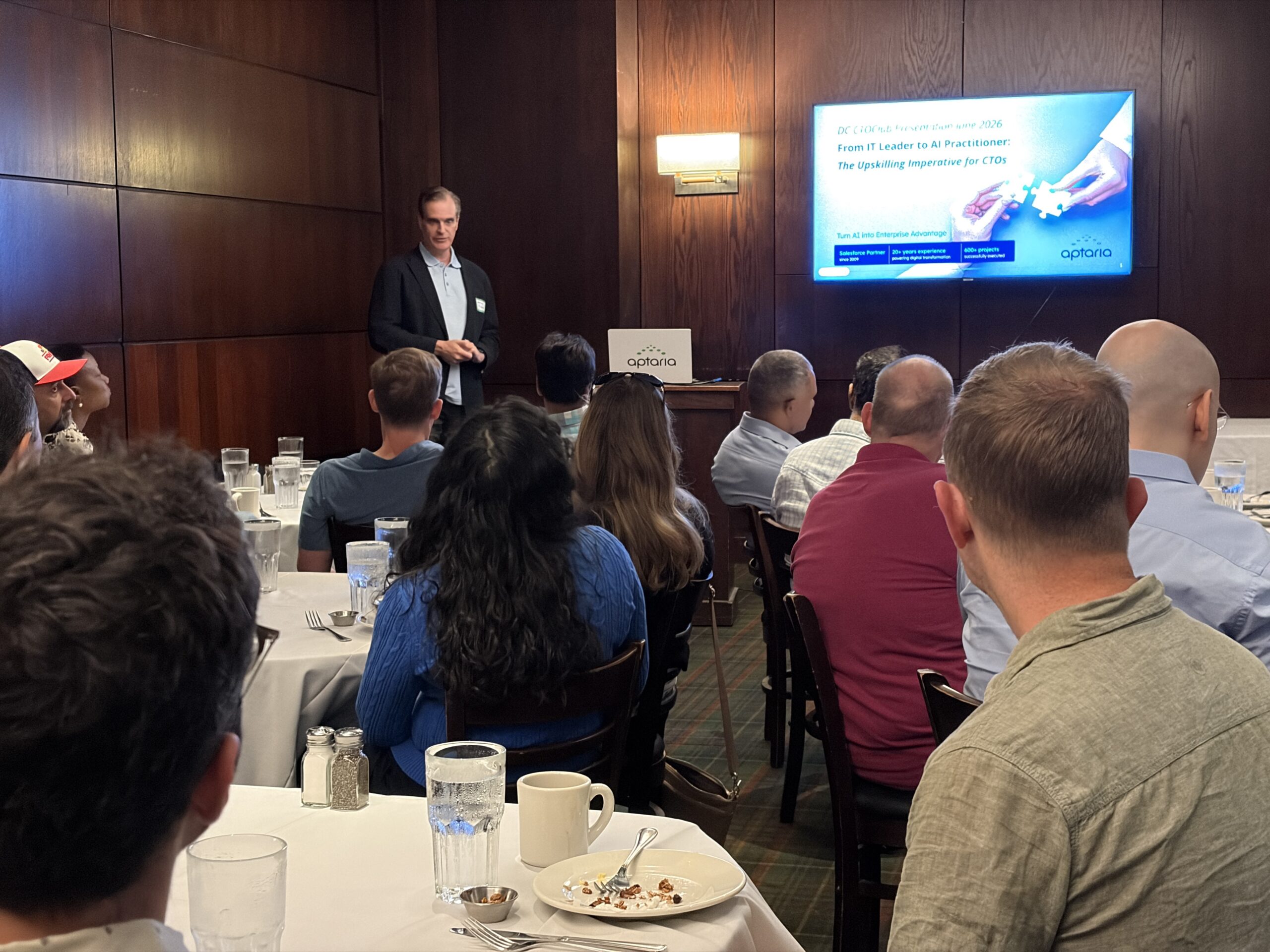
In June, I stood in front of a room of DC-area CTOs and made an argument I expected to land as controversial. It didn’t: most enterprise AI initiatives are failing on training, not technology.
Nobody pushed back. Several people nodded in the way you nod when you’ve already learned something the expensive way. Here’s the argument — the full talk is on video below.
The question arriving in most boardrooms is some version of “what’s our AI strategy?” It sounds reasonable. It’s also the wrong starting point. It skips the thing that actually determines whether any of it works: whether your people can use these tools well.
You can buy a platform. You can license a model. You cannot buy the organizational capability to apply either one to your actual work. That has to be built, and most companies haven’t started.
The framework I use with clients has three tiers, and the order matters more than any single tier does.
Use is applying existing models and tools well — prompting with skill, knowing what these systems are good and bad at, building them into real workflows rather than treating them as a novelty. Tune is adapting models to your own data, context, and processes: retrieval over your documents, structured outputs matched to your systems, evaluation against your standards. Train is fine-tuning or training models for cases where nothing off the shelf will do.
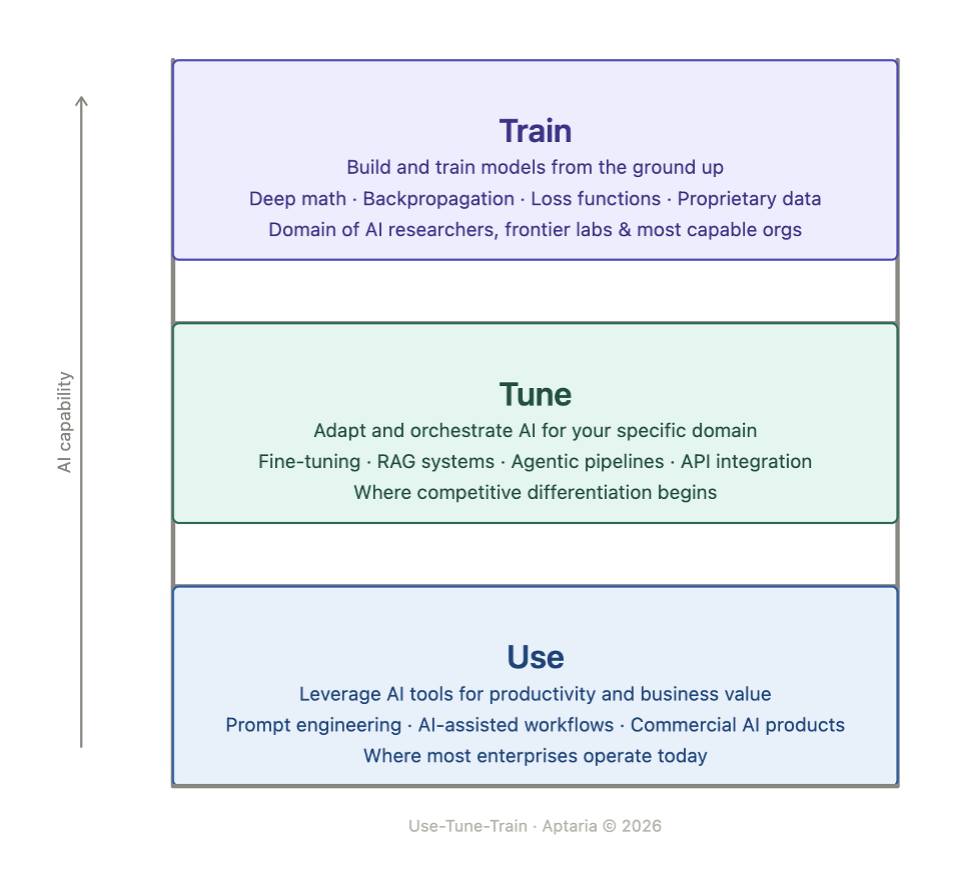
Here’s what I see repeatedly: organizations jump straight to asking whether they should train their own model. It’s the most expensive tier, the most technically demanding, and almost never the right first move. The honest answer, most of the time, is that they haven’t finished using what already exists.
I put this diagram up during the talk because the field of AI makes the same argument about itself. Read it bottom to top: STEM Skills — multivariable calculus, linear algebra, probability and statistics, discrete math, Python — is the foundation. On top of that sits Statistical Learning: machine learning, deep learning, reinforcement learning, graph learning. Above that, Applications — natural language processing, computer vision, audio, scientific and biomedical work. At the top, where abstraction is highest, sits Agentic AI: digital agents and robotics, the layer everyone wants to talk about at conferences.
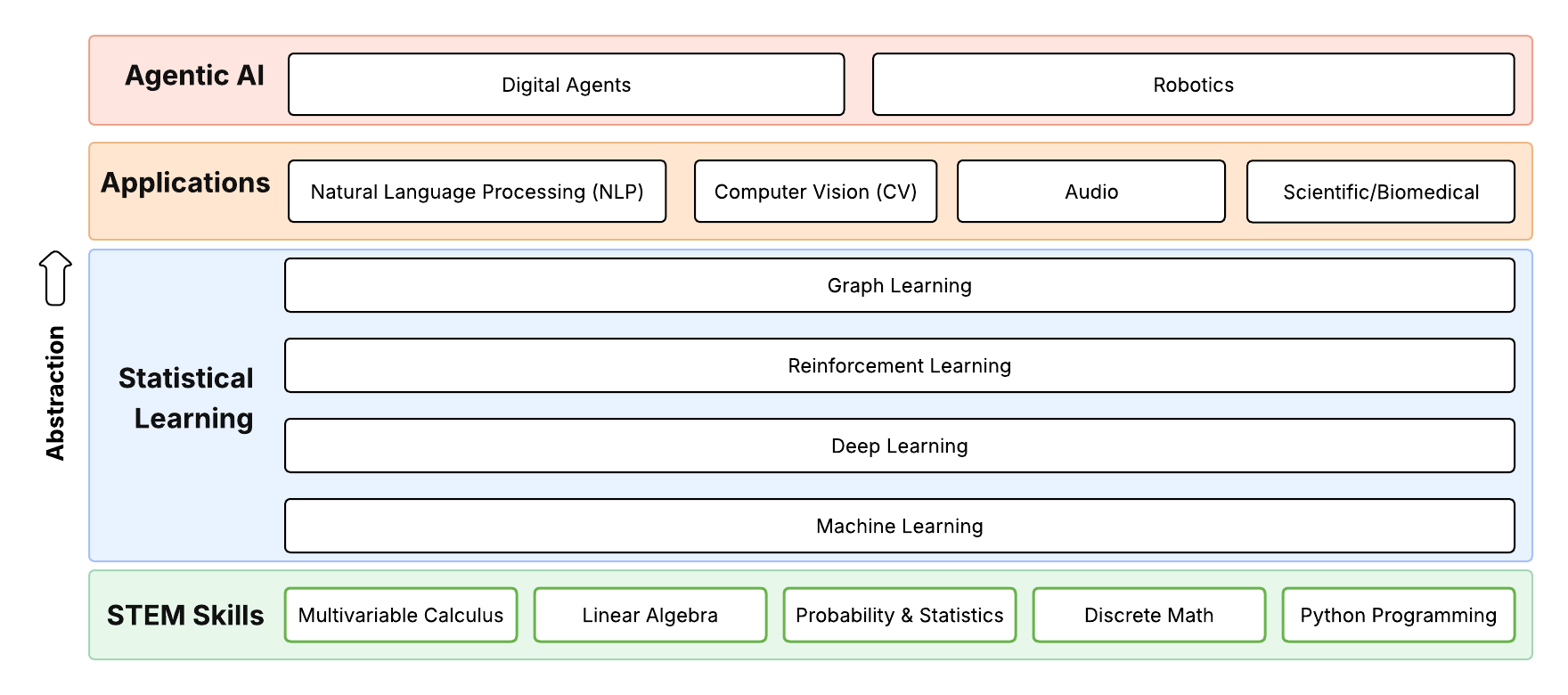
Nobody builds a working agent by starting at the top. The math underwrites the statistical methods, the statistical methods underwrite the applications, and the applications are what eventually get wrapped into something that acts autonomously. Skip a layer and you get something that looks impressive in a demo and falls apart in production.
I’m not suggesting your finance team needs multivariable calculus. But the shape of the pyramid is the point: capability compounds bottom-up, in AI research and in your organization’s adoption of it. That’s exactly why Use, Tune, Train works the same way — and why a team that jumps straight to Train before mastering Use is making the same mistake as someone trying to build a robot without linear algebra.
The reason to think of it as a pyramid rather than a menu is that skipping levels doesn’t work. A team that can’t evaluate whether a model’s output is correct cannot responsibly deploy one that operates autonomously. A company without data discipline will not get value from retrieval. Each tier is load-bearing for the ones above it.
If you’re the person being asked about AI strategy, the most useful thing you can do this quarter probably isn’t selecting a vendor. It’s finding out honestly where your organization sits on both of these frameworks.
Which tier are you actually operating at? Not aspirationally — actually. And what’s the next capability your team needs, rather than the most impressive one you could announce?
Those questions are less exciting than a platform decision. They’re also the ones that determine whether the platform decision matters.
If your organization is working through these questions, I’d welcome the conversation — get in touch.